I have spent a lot of my life trying to make myself smaller. And I’m guessing you have too.
Now, I mean this in the most literal sense of the phrase: “smallness” is a coveted aspect of the dancer body that is wholly unattainable to every individual and entirely desirable to every individual. The world is such that the size of a woman’s body is apparently everyone’s business; a public display to be gawked at and groped alike. We live in a world of tabloids writing dozens of articles about women at the height of their careers; not about their groundbreaking success, but instead about the size of their lower abdomen. A world where thinness correlates with health, success, beauty; every metric of worthiness.
Let me be clear: this ideology is wrong. I know it, and chances are that you do, too. But this ideology has permeated the dance world from the time that thinness has been idolized in society’s eyes. It is worth mentioning that just as rounder arms and full stomachs were the epitome of beauty in centuries-old society, the same features were seen in the earliest ballerinas.
Somewhere along the line, dance stopped being purely about the passionate display of ecstasy in movement. The world chose the pursuit of thinness; of frail arms and narrow lines over the unadulterated ability to pluck at the threads of emotion in an audience member. And now, how many little girls pay the price? Little girls who entered this field because of one fact alone: their unbridled love for dance.
The relentless pursuit of trying to make ourselves smaller is the ultimate killer of joy and the silent thief of success.
We, as artists, feel so beautifully; so enormously.
Is it really so worth it to spend a life carving away at our thighs and stomachs in hopes of minimizing our bodies to nothingness?
Rant aside, my aim with creating ABCD is to develop the practice of understanding our bodies to dance in a healthier way. That “healthier way” is not just about perfecting technique or building muscle– though that’s certainly a great benefit– but more so to expand into the most aware and informed versions of ourselves; to cultivate a deep respect for what the body’s anatomy is capable of producing. So yes, while I want to share as much as I can about the science of movement, it goes hand in hand with dismantling these toxic ideas that are implicit in the way we consider the world.
***I should further clarify that I am not promoting unhealthy lifestyles or unhealthy weights in any sense. Instead, I simply advocate for the idea of “healthy” looking different for every person in spite of the “one size fits all”- thinness that the dance world sees as perfection.***
Onto the main content of this article!
I hope you’ve all had the chance to read my last post on breath anatomy. It’s a very elementary introduction, but important in how it invites you to begin considering a deeply important aspect of dance– and of life. One of the things that I mentioned in this last post was the sheer number of muscles involved in taking a breath in and out. Breathing is NOT a passive motion, and instead relies on muscular contraction to appropriately fill the thoracic cavity.
As mentioned in my last post, I want to talk about something that all of us are guilty of doing: sucking in the stomach while we dance.
Engaged Core Vs. Sucked-In Stomach
An engaged core is an absolute necessity for any dancer. The core is what allows us to expand freely; to travel boundlessly across a stage. A strong core likewise allows the dancer to perform and recover after bursts of intense and difficult movement, as well as provides that effortless sense of control over the limbs. So, an engaged core is a necessity. A stifled, sucked-in stomach does the exact opposite!
We’ve gone over the muscles of the stomach region in the previous post, but I’ve added that helpful (somewhat rudimentary) slideshow of the anatomy again here.

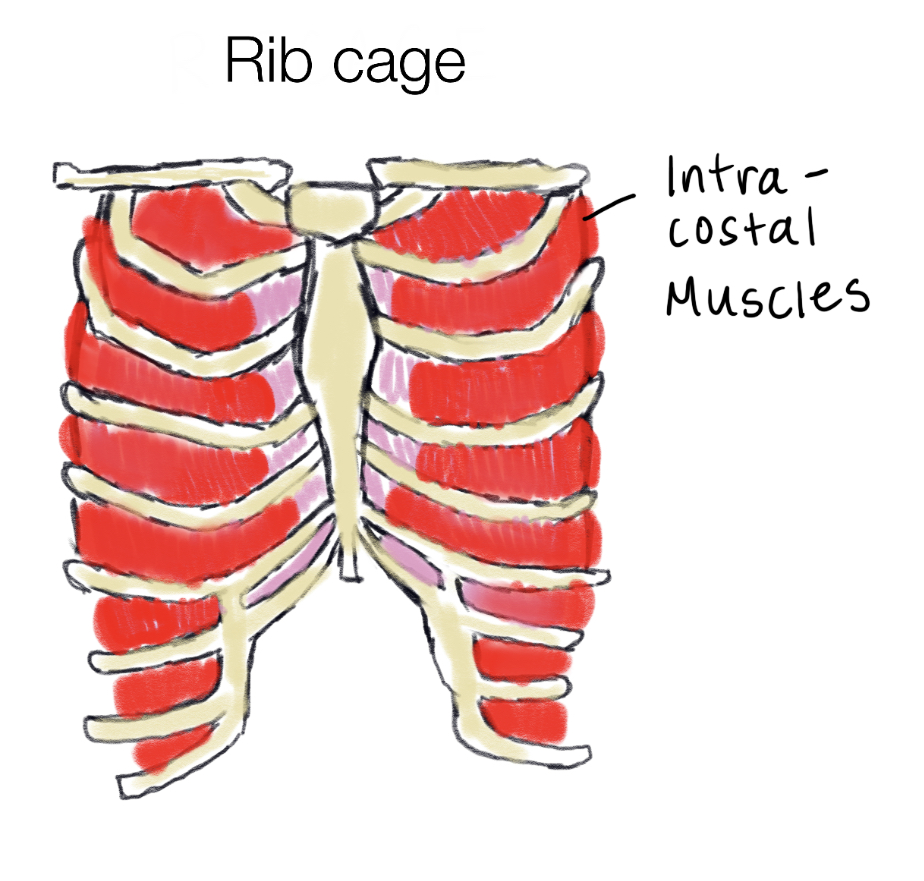
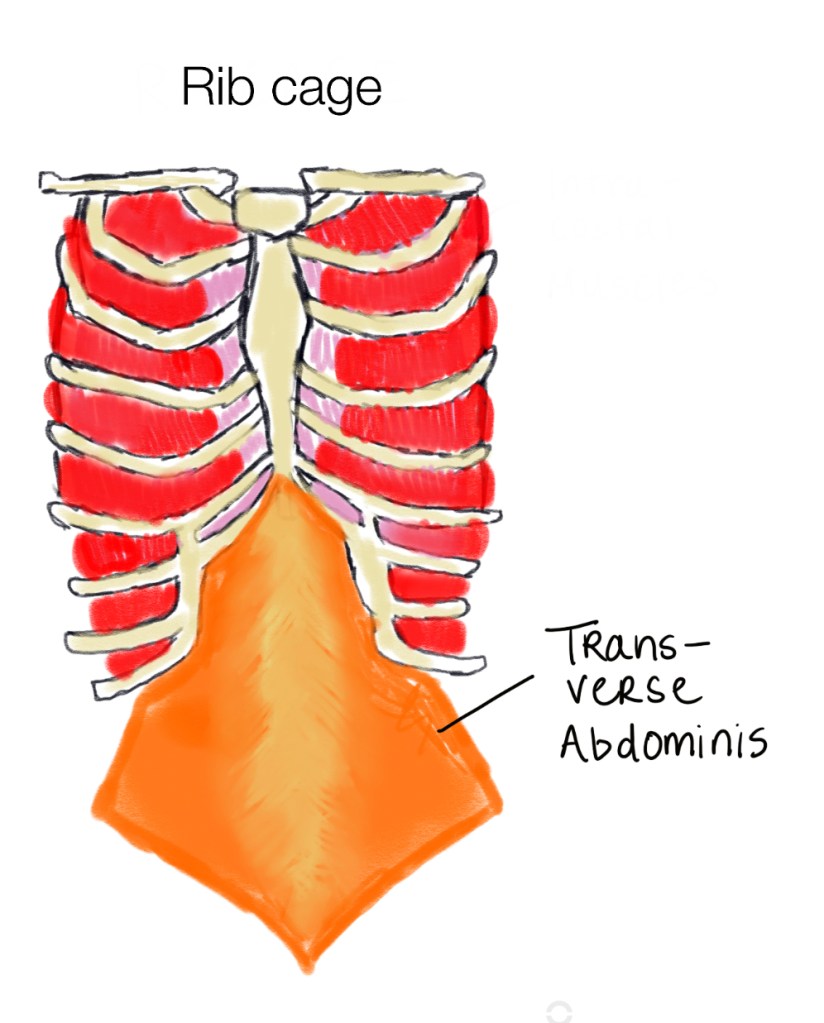
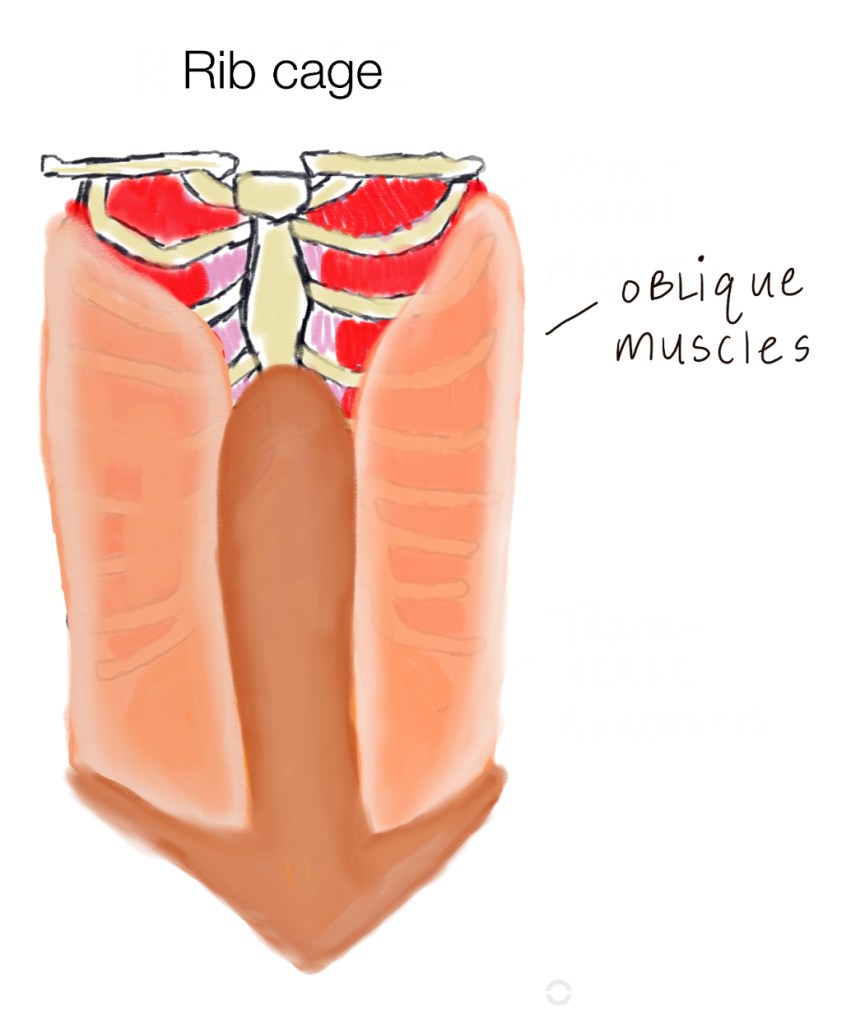
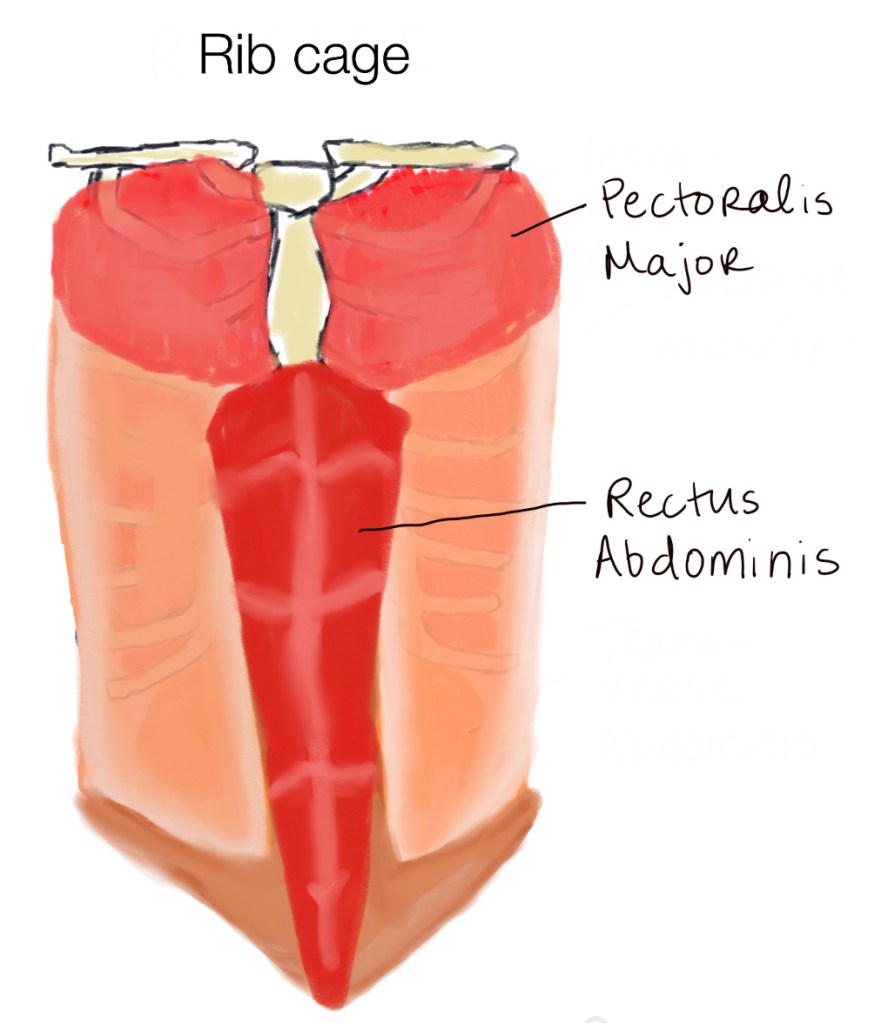
When you see those dancer washboard abs and try to contract your own stomach in order to achieve that thinness, you’re most likely simply tensing the rectus abdominis. All this does is engage that very top layer of muscle, while distorting the line of your spine and pelvis. If there’s one thing that dancers know, it’s that alignment is everything– and trying to “suck in” by flexing the rectus abdominis is counterproductive to this goal.
Here’s a great place to try to draw an embodied connection between two systems: respiratory and muscular. We’ve established that the muscles of the torso region are imperative in taking healthy breaths. However, if these muscles are contracted in odd manners now because of this sucked-in stomach and the rib-hip alignment is out of place, would you expect a healthy, full breath?
If you said no, congratulations!!! You’ve learned something from my blog! (Or maybe you’re just smart.)
Regardless, the answer is no. You cannot expect to take in a productive breath– one that can fuel the demands of a long grand allegro combination or a grueling adagio— if your rectus abdominis is flexing and distorting the spine midline. If you don’t believe me, try it! Try sucking in your stomach and attempt to take a deep, comfortable breath.
Spoiler alert: you can’t.
Consequences of the Sucked-In Stomach
I’m not going to sugarcoat it: it’s difficult to unlearn something that we’ve been taught to do from Day One. That said, sucking in the stomach actually has harmful implications. For starters, as I mentioned, it’s counterproductive to achieving a healthy alignment.
This is actually another common correction that is highly misunderstood in dancers. I’ll make a whole separate post in the future about alignment because it’s exceptionally important, but proper alignment of the body essentially boils down to finding a healthy neutral for the spine, ribs, hips, and knees. In this manner of body position, no undue stress or tension is placed on the joints, and this– pretty intuitively– allows us to move and expand into space. When the stomach is sucked in, it is extremely common for the spine alignment to distort, and even skew the alignment of the rest of the body.
Imagine trying to build the Eiffel Tower, but every layer of metal is placed ten feet out of line with the following layer. You would very quickly get a very unstable tower, and one that couldn’t support a great height. Your body, when not in alignment, is just like that when you attempt battements and saute de chats— only more painful. Pretty good analogy, right?

You may have heard of this in the news lately: “Hourglass Syndrome.” It’s the name given to the long term effects of sucking in, or gripping those stomach muscles for extended periods of time.
Imagine tensing the muscles of your shoulder and bicep with the same force that you use to suck the stomach in. Just try it! Now imagine doing that movement for years on end. It’s pretty uncomfortable, isn’t it? Your stomach muscles, just like any other muscles, are subject to muscular imbalance. Contrary to what you might think– and interestingly so– constantly gripping and tensing these muscles is actually WEAKENING the soft tissue.

Similarly, great tension in one region tends to have an effect on other regions of the body as well. Consistent gripping of the abdominals often places undue stress on the lower back, pelvic floor, and even neck. Think back to the section on alignment, and I invite you to look at the diagram to put together how that stress may be created. The importance of cultivating an awareness in your own body cannot be understated, and I’m going to do my best to incorporate it into each post! As dancers, undue stress anywhere is counterproductive– so why are we still sucking in the stomach when it’s got so many harmful effects?
So How Do I Stop the Sucked-In Stomach From Sucking In?
There are a couple key exercises that I’ve done to help engage the deep core muscles that I’m going to share with you as well. When you can understand the layers of muscle that you need to get under, I think it gets easier to work on activating the whole core as opposed to just that top layer that we can pretty easily flex.
In my next post, I’ll go through these exercises and draw out the anatomy of each exercise. They’re very, very common exercises, but I will hopefully help you understand them and their applications by painting a good picture of what you should be feeling. The deep core isn’t easy to engage, but by knowing what you need to be on the lookout for, hopefully it’ll get easier.
I want to end this post by saying that you’re not alone.
If you’re reading this, chances are that you’ve been told at some point in your life that you need to be smaller; thinner; skinner. I want to say that you’re not alone. I’ve been told this at my lightest and at my heaviest. I have friends who weighed less than prepubescent children who were still told they needed to be thinner.
The answer to this is not sacrificing our health in favor of a standard that can never be achieved.
The answer is to GROW. To breathe deeply enough to fan the fires of our passion; our ambition; our drive to dance and paint pictures with our bodies.
I hope you’ll start here. I hope you’ll start with just one breath, and then maybe another.
For more reading and references:
Check out these great articles on the drawbacks of sucking in the stomach:
https://health.clevelandclinic.org/hourglass-syndrome-why-you-should-stop-sucking-in-your-stomach




 Welcome to the Home of Anatomy-based Classical Dance™.
Leave a comment